Ingredients
Method
- In a large bowl, stir together the f4 cups all-purpose flour, ½ teaspoon instant yeast, and 1-1½ teaspoons fine sea salt. Add the 2 ¼ cups warm water and mix well to incorporate all of the flour. I often find I need a little more water to create the dough, so add more water 1 tablespoon at a time if needed. Stir everything together to form a loose dough.
- Cover the bowl with a clean kitchen towel or plastic wrap and place it in a warm place. Let the dough rise for 16-18 hours, or longer.
- When ready to bake, uncover the dough. Pull up 1 side of the dough, then turn the bowl and repeat this step 3 more times so that the dough collapses. Cover again and let rest for 15 minutes.
- Place a dutch oven in the oven and preheat the oven to 500℉.
- Lightly flour a large cutting board, and keep the flour handy. Dump and scrape the dough onto the cutting board and adding a little more flour if necessary so that it's not too sticky to handle, knead and roll the dough for 1-2 minutes. Roll the dough into a ball and place it seam-side down on the cutting board, lightly flour it, and cover with a towel. Let rise for 1 hour.
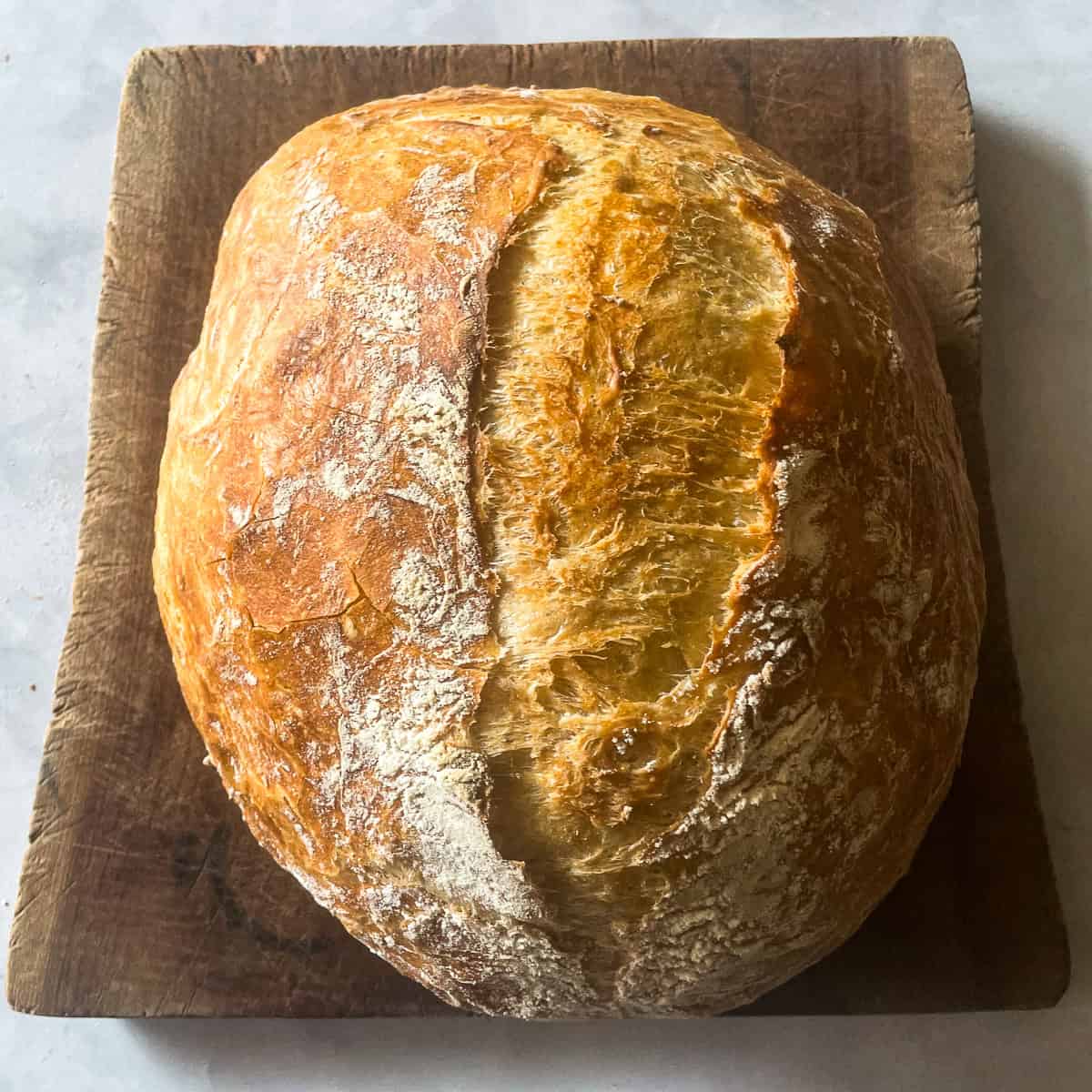
- Very carefully add the dough to the hot dutch oven. (You may score the top before or after placing it into the dutch oven if you like.) Add the lid and lower the temperature to 475℉. Bake for 30 minutes covered, then remove the lid and bake the bread for 15-25 minutes until golden brown.
- Remove the bread from the dutch oven and let it cool on a rack for at least 1 hour before slicing it.
Notes
- Let it rise. Lahey advises letting the no knead dough rise for 12-18 hours, preferably 18 hours. I let my loaf rise for a minimum of 16 hours, and you can let it go for up to 2 days. The longer rise time will deepen its flavor and make for a better baked loaf.
- Keep in a warm place. Try to let the bread rise in a warm place—I admit this is not always possible for me because our house tends to the cool especially in the winter. I keep it near the oven which is a warmer spot. If your house is also on the cooler side, you can place the bowl in the sun, or add a few hours of rise time to allow the dough to rise more.
- Try the fridge. If you have the time and want a deeply flavored loaf, afyer the initial long rise at room temperature, cover the bowl of dough with plastic and place it in the fridge for up to 3 days. The day you plan to bake, remove it from the fridge, follow the recipe instructions for the brief kneading process, then let the bread sit and warm up at room temperature for at least 2 hours.
- To score or not to score. Scoring is the process of making shallow cuts to the surface of a loaf before baking. You can make small decorative cuts or use a sharp knife to quickly slash down the center of the top, or skip scoring altogether and simply bake the bread seam-side down in the dutch oven!
- Keep the dutch oven in the oven! Starting with a hot dutch oven helps create that lovely crackly crust. So when you are preheating the oven, let the dutch oven heat as well.
- Bake on high heat. I preheat my oven at 500F and then lower it to 475F for the actual baking.
- How do I know my bread is done? After a lot of baking bread, you'll know when your bread is done by how dark the outside crust has become. I find my sweet spot for dutch oven bread to be 30 minutes covered, then 20 minutes uncovered, but times may vary depending on your oven. If you want to make extra sure the bread is done, use an instant-read thermometer. The loaf is fully cooked when it reaches 209-210°F (98-99°C).
- Cool the loaf completely. It's SO hard not to tear into a warm, freshly baked loaf of bread as soon as it comes out of the oven, but I urge you to wait at least 1 hour, preferably 2. This allows the starches to set and solidify (if you've ever been disappointed by a gummy crumb, chances are the bread didn't rest long enough)
- Try another flavor. Use this recipe as your base to make cinnamon raisin no knead bread, an olive oil and herb bread, or a cheesy bread! Stir these add-ins to the dough before shaping it and letting it do its final rise.